There are a number of natural substances that are just as
effective without harming the body and health. Natural
antibiotics are often found among spice plants.
In naturopathic practice, thyme is used against respiratory
infections. The thyme oil is excreted by the body through the
respiratory tract and thus reaches the site of action directly
to the mucous membranes of the throat and bronchi. The extract
of cistus, which can be taken in addition, prevents bacteria
from adhering to the mucous membranes, so that the pathogens
can be coughed up more quickly. Savory and
also have antibiotic healing properties. Basil oil is even
better than standard conventional medical treatment at
reducing inflammatory reactions in facial acne.
Stomach and intestinal infections can be treated well with
garlic, cloves and cinnamon. Also in the case of bladder
infections, one should first think of the natural
alternatives.
Here, antibiotics are prescribed too often only because of
fear from rising infections. Onions have a very good effect
here, they kill the germs and flush the bladder at the same
time. In addition, cranberries allow the cystitis to heal
quickly. Cranberries prevent the bacteria from attaching to
the bladder wall, so they can be excreted more easily.
The list can be continued at will and becomes longer and
longer the more one deals with the ingredients of the plants.
It is therefore completely unnecessary to immediately resort
to chemical antibiotics. Nature has many excellent
antibacterial plants ready for us, most of which also have
other positive effects. Many of them can also be used to treat
viral infections and have a general stimulating effect on the
immune system, so they can also be taken as preventive
measures during the cold season. And all this (almost) without
side effects.
Oregano [web02]
from Mossad Wikipedia:
https://de.wikipedia.org/wiki/Oregano [web02]
Summary:
Oregano was called "Origanum" in Latin, in German also
"Echter Dost" (Origanum vulgare). This is a thistle, also
called Wild Marjoram (marjoram is from the same genus)."
Oregano (Dost) grows up to about 50cm tall and is a
medicinal spice plant from the Mediterranean region. It is
cultivated in warm temperate areas worldwide, grows
especially well in warm limestone soil, is found in dry
and sparse forests, in oak woodland or pine forest, along
roadsides, forest edges, on sunny slopes and hedgerows, on
rough and dry grasslands.
In the leaves are oil deposits, these essential oils are
strongly fragrant. The flowers are large hermaphrodite or
small female, or only female. The nectar contains up to
76% sugar. Bees, butterflies and hoverflies are happy
guests there with a focus at 1 pm.

Oregano flower with butterfly fritillary [4].
The fruits of oregano open in October and November,
releasing their seeds with the wind as "balloon fliers" in
the breeze. Earthworms eat the seeds as well.
Ingredients of oregano
Oregano contains:
-- essential oils such as thymol, carvacrol, p-cymene.
-- tannins
-- bitter substances
-- vitamin C (0.2672g per 100g fresh weight)
-- phenols
Oregano in the kitchen
As a spice, oregano has been a standard around the world
for 300 to 400 years, but it's only rarely mentioned in
historical cookbooks, and when it's mentioned, it is often
mentioned as a "medicinal and magical plant." In
Mediterranean countries, oregano is a standard in sauces,
salads, casseroles, lamb meat.
-- Greece: Greek oregano (Origanum vulgare ssp. hirtum)
has the most intense flavor.
-- marjoram (Origanum majorana) has got a weaker taste
-- Turkey: There is Turkish oregano (Origanum onites)
-- Mexico: Mexican oregano (Lippia graveolens), is far
related to Origanum vulgare from southern Europe, has got
a similar and stronger flavor
Healing properties of oregano
-- Oregano (Dost) was already known in ancient times
(Greece) as a warming remedy
-- Hippocrates of Kos mentions oregano as a means to
accelerate childbirth and for healing hemorrhoids
-- in teas, oregano is an ingredient in teas for
gastrointestinal cramps.
Antibiotic oil of oregano [against infections]

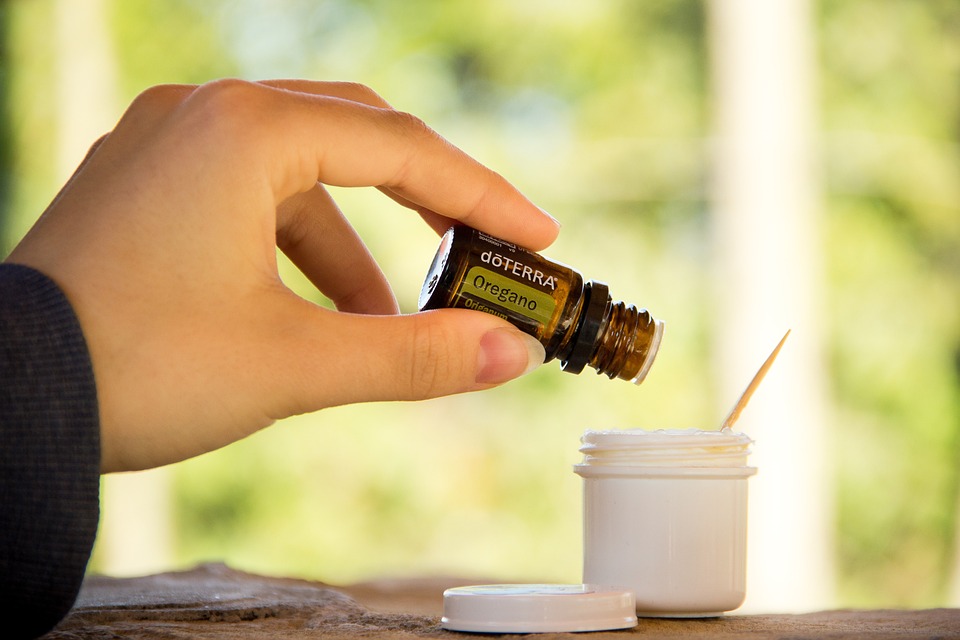
Oregano oil [3]
-- oregano oil has a high content of phenolic aromatic
substances, which have antibacterial effects
-- the essential oil carvacrol inhibits inflammation
-- oregano oil is mixed with a carrier oil (e.g. sunflower
oil) and taken in drops (e.g. 2 drops) diluted with the
carrier oil
-- healing of digestive problems and diseases of mouth,
throat and nose.

May 11, 2014: <Five effective
antibiotics for which you don't need a prescription>
- Garlic - colloidal silver - Oregano oil - Echinacea
(coneflower) - Manuka honey [web03]
(orig. German: <Fünf wirksame Antibiotika,
für die Sie kein Rezept brauchen> - Knoblauch -
kolloidales Silber - Oreganoöl - Echinacea (Sonnenhut) -
Manukahonig) [web03]
http://info.kopp-verlag.de/medizin-und-gesundheit/natuerliches-heilen/derek-henry/fuenf-wirksame-antibiotika-fuer-die-sie-kein-rezept-brauchen.html
[web03]
<Derek Henry
Hospital antibiotics are now part of the "medicine" that
is prescribed most frequently, or rather far too much.
Patients have ruined their digestive system and,
paradoxically, weakened their natural defenses against
subsequent infections.
With the following five natural antibiotics, you can fight
infections without crippling your digestive system.
[...]
Oregano oil
Oregano oil [3]
Oregano oil kills pathogenic bacteria but does not attack
beneficial bacteria. Its antiviral and antifungal effects
make it a potent triple combination that can rival
pharmaceuticals without promoting antibiotic resistance.
The decisive antimicrobial ingredient in oregano oil is carvacrol.
Control that the oregano oil you choose contains at
least 70 percent of carvacrol to be effective.
[...]
Sources for this article were among others:
NaturalNews.com
NaturalNews.com
NaturalNews.com>
June 11, 2016: Healings with oregano:
oregano oil, oregano capsules, aromatherapy [web04]
"Oregano as an antibiotic – what is it all about?"
[web04]
(orig. German: "Oregano als
Antibiotikum – was hat es damit auf sich?") [web04]
https://www.wissen.de/oregano-als-antibiotikum-was-hat-es-damit-auf-sich
[web04]
no date - the first registration in the Internet archives
is at June 11, 2016:
https://web.archive.org/web/20160901000000*/https://www.wissen.de/oregano-als-antibiotikum-was-hat-es-damit-auf-sich
Summary:
Medicinal properties
-- already in ancient Greece oregano is mentioned against
inflammations (quote: ""shooting star" among natural
antibiotics") [web04]
-- Oregano with polyphenols has got a strong antibiotic
effect, also against staphylococci, i.e. where the toxic
pharmaceutical antibiotics fail [web04]
-- oregano has got a healing effect against inflammation
of the mouth and throat, respiratory diseases,
gastrointestinal inflammation, liver and gall bladder
(studies prove this) [web04]
-- against spasmodic cough, whooping cough, flu, cold,
common cold, oregano inhibits messenger substances that
provoke inflammation [web04]
-- Interactions with other medications are probably not
very bad, but must be kept under control and checked by a
doctor [web04]
-- Aromatherapy is possible with oregano [web04]
-- Oregano essential oils have a powerful healing effect
and are an element of aromatherapy: relief of symptoms of
illness and general increase in well-being, the effect is
through the sense of smell and inhalation [web04]
-- Oregano oil is a "herbal miracle oil" and can be bought
at organic food stores or in online pharmacies [web04]
-- highly effective oregano capsules for oregano and
oregano oil [web04]
Oregano is so popular not only because of its fragrance
and wonderful taste - but the contained carvacrol is
considered to be a particularly good antibiotic.
Article:
What's inside this medicinal plant?
Oregano is from the plant family of labiates, but oregano
is a special representative with an intensive and aromatic
flavor. Normally the Mediterranean region of the
Mediterranean Sea is the region where it's cultivated.
There is intensive sunlight, and with this sun, the
different ingredients are connecting. The scent already
alone has an effect provoking more appetite. And when the
herb is processed, many more effects are coming out. Dried
oregano can also be used as a remedy when the soil of the
cultivation ground has got a high lime density.

Dried oregano [9]
Oregano is also grown in our climate. However, the special
mixture of soil, especially lime and gravel, makes the plant
components originating from southern Europe much more
effective. Here is a list of ingredients for medical
purposes.
|
Tannins and bitter substances
|
|
Essential oils, especially borneol, thymol,
carvacrol, crymol
|
|
Fungicides
|
What effect does the use of oregano
promise?
Principally the situation of studies is positive and
comprehensive concerning medical use of oregano. There is
a general trend for using more "natural remedies" which
have less side effects, and therefore more studies were
made. But also data from Old Greece play a role so oregano
is something like a "shooting star" among the natural
antibiotics.
From oregano, the essential oils are applied, above all
concerning healings of mouth and throat. Here the oils are
working reducing inflammations. The same oils are healing
illnesses of the digestion tract, and some illnesses of
the respiratory ways. Oregano is healing in many ways the
illnesses of stomac, intestine, liver and bail, this is
proven by meta studies. These are studies controling many
little clinical studies permitting a general thesis about
the ways of effects of a medical ingredient.
Special case: Use in aromatherapy
As already mentioned, oregano contains essential oils and
is especially applied in aromatherapy. This is a basic
healing by natural practitioners. The oils are reducing
illnesses and are promoting wellbeing. As an alternative
treatment it's applied aboe all against mood disorders, as
both - the sense of smell and the absorption by inhalation
- have a positive effect on involved organs.
But the application should be moderate because the
dependency to the dosis is an elementary basic element for
evading allergic reactions. Concerning skin diseases
putting the pure oil on the skin this can provoke
irritations or even wounds in the extreme case. The risk
for this is higher when essential oils are not of a
natural origin, so synthetic or half synthetic oils. In
general the application has to be moderate as always not
awaited toxics can be contained.
Medical use based on (effective)
components of oregano
The main effect is certainly in the form of the essential
oils it contains. Studies in the USA have compared the
potency of oregano as an antibiotic with 18 other
antibiotics for the treatment of infections, in particular
infections with MRSA staphylococci. These are extremely
multi-resistant bacteria that play an inglorious role in
wound infections. They can settle in the mucous membranes
or act on the skin. Although MRSA staphylococci are less
prevalent than other staphylococcal species, the area of
infection in this disease is more severe.
High use of antibiotics has rendered bacteria, especially
MRSA bacteria, insensitive to the wide variety of
antibiotics. According to the Robert Koch Institute,
classic approaches to removing MRSA from mucous membranes
and skin regions are based on sanitizing MRSA carriers.
Here above all by means of nose ointment, disinfecting
mouth rinses or however an application of antiseptic
soaps.
Since oregano contains certain polyphenols, i.e.
antioxidants, these can be used specifically for
infections that do not respond to conventional
antibiotics. It is now also known that other components
have a positive effect on health and the healing process
of infectious diseases. Thus, one thesis is that through
application further messenger substances are inhibited,
which would otherwise promote the formation of
inflammation. Oregano and oregano oil for self-medication
can be found in the form of dietary supplements as
capsules. This herbal miracle oil can be bought in health
food stores or online pharmacies. With online pharmacies,
it is in any case always worthwhile to compare according
to shipping time and price as it is offered, for example,
at Qomparo.de.
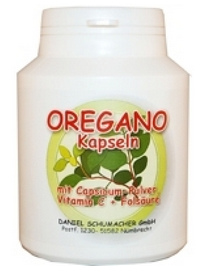
Oregano oil [3] - Oregano capsules [6].
Further notes on the consumption of
oregano
Oregano, in addition to the composition of tannins and
bitter compounds already explained, is also known as a
natural supplier of vitamin C. The unique mixture leads to
an antiseptic effect, which then naturally inhibits
inflammation. In the field of self-medication, oregano in
the form of capsules is recommended by alternative
practitioners for the relief of diseases in the area of
cramps or whooping cough. Popular healings are against
flu-like infections, mild colds or manifestations of
colds.
However, it's not recommended to make a diagnose oneself
and apply oregano as a medicine oneself aonle. Well,
normally interactions with natural medicine are less - but
a norma lperson cannot consider it right. So it's always
recommended to consult a medical doctor.
However, independent application based on no quantifiable
medical diagnosis should be refrained from. Although the
interactions with classical medicines are generally lower
with natural products - a final assessment can not be made
by laypersons. Consultation with the attending physician
is therefore usually advisable.
Conclusion
The extremely broad spectrum of effects of oregano in
medicinal application results from its composition of
tannins and bitter substances, fungicides and essential
oils. They allow an application in the context of
aromatherapy, in the form of highly effective capsules
also for the relief of general mood disorders.