Copper
in animals
-- Copper is a trace element and is vital for mammals, but
it is deadly for microorganisms [web03]
-- Copper is sometimes added as an additive to the feed,
with pig breeding e.g. copper-(II)-acetate monohydrate (an
approved feed additive) [web03]
Medicinal effect
-- Copper is passed from the small intestine into the
cells [web02]
-- Copper enables the absorption of iron and the transport
to the spinal cord for the formation of new red blood
cells [web02]
-- Copper promotes the iron metabolism, the oxygen
transport in the blood (through the formation of red blood
cells) and thus the energy metabolism [web02]
-- "Copper has a particularly beneficial effect in
combination with iron and is an active substance of
numerous enzymes that determine cell oxidation, for
example." [web02]
-- Copper promotes stable bones, the formation of the
skeleton [web02], promotes the formation of the bones
[web03]
-- Copper promotes stable tendons and vessel walls [web02]
-- Copper promotes the function of brain and nerves
[web03]
-- Copper promotes collagen formation [against wrinkles of
the skin and against sunken skin] [web02], is important in
collagen metabolism [web03]
-- Copper promotes pigmentation [web02,web03] of skin and
hair [web03] [thus: against gray hair]
-- Copper promotes the coat and chemical compounds which
are related to coat formation (iron, sulphates, calcium,
zinc) [web02]
-- Excess copper is stored in the liver mostly without
disadvantage for the animal - in few animal species the
liver changes [web02]
-- Copper is a component of ferments [web02]
-- Copper and iron cause a reduction of hemoglobin
formation [web02]
-- Copper promotes the cross-linking of elastin and
collagen synthesis [web02]
Copper supply
-- too much copper in the food can provoke copper diseases
[web02]
-- animals get copper with their diet, supplements are not
necessary [web02]
Copper in dogs
Dog races [1]
-- Dogs have a copper requirement of 0.1 to 0.2mg per day
depending on their body weight [web02]
-- raw meat often causes a copper deficiency in dogs
[web02]
-- foods with an excess of trace elements provoke a copper
deficiency [web02]
[Conclusion: You always have to pay attention to a balance
in your diet].
Copper deficiency symptoms in animals

Dog with gray hairs - and nobody knows why? - Cupper
is missing! [2]
-- changes in the coat, e.g. gray hair
[web02]
-- changes on the skin especially wrinkles around nose and
eyes with lack of collagen formation [web02]
-- anemia [with lack of energy due to lack of red blood
cells] [web02]
Folgen:
-- Wasserpflanzen, Schnecken, Wirbellose
und Fische brauchen nicht viel Kupfer
-- Fische bekommen eine Kupfervergiftung, z.B. Welse
-- wirbellose Tiere wie Krebse und Garnelen sind besonders
gefährdet [web01].
Superfluous copper
is excreted mainly through the stool, in small quantities
through the urine [web02]
Deadly copper ions in ponds and aquariums
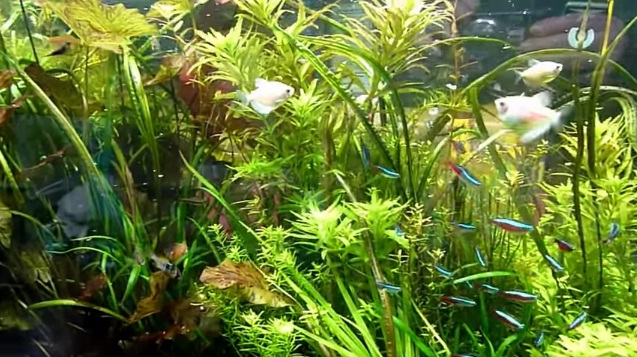
Aquarium [3]
Copper measurements are impossible
-- low copper concentrations in water are not measurable,
although even low concentrations are deadly for
invertebrates [web01]
-- copper ions are colorless and odorless and remain
undetected with the human senses [web01]
Copper poisoning in the aquarium can occur
-- by copper-containing tap water
-- through copper-containing medicines for the fishes in the
aquarium
-- by copper-containing algae killers
-- by copper-containing plant fertilizer, which is not
intended for aquariums. [web01]
Consecuences:
-- aquatic plants, snails, invertebrates and fish don't need
much copper
-- fish get copper poisoning, e.g. catfish
-- invertebrates like crabs and shrimps are especially
endangered [web01].
Copper water + copper wire in the garden
-- water in copper vessels or with a copper coin in it
stays fresh longer and does not get rotten so quickly
[web01]
-- Copper wire or copper foil on the vegetable patch
repels snails: When the snails crawl over the copper, the
copper oxidizes through the snail slime. This creates an
irritating substance, so that snails don't crawl any
further [web01].
-- Copper is a nutrient for crops to a small extent
[web05]
Copper water as a bio-pesticide: damages
earthworms and microorganisms
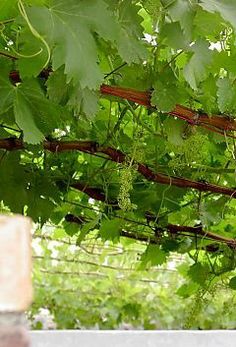
Vines [4]
-- copper does
not form any resistances [web05]
-- copper is a bio-pesticide against fungal diseases, in
humid summers more copper has to be used against fungi
[web05]
-- about 1890 the effect of copper mixed in lime was
discovered, the "Bordeaux broth", against downy mildew in
wine, copper bio-pesticides are absolutely valuable in
organic viticulture [web05]
Zitat:
Connections:
Copper carbonate, copper lime,
copper chloride, copper hydroxide (blue copper),
copper lignin, copper oxide, copper oxychloride
(green copper), copper oxide, copper soda, copper
sulphate, Burgundy broth (copper soda broth made of
copper hydroxide and sodium carbonate), ), Bordeaux
broth (copper lime broth made of lime milk and
copper sulphate) [web17]
Use:
Since the end of the 19th century, various copper
compounds have been used, especially in agriculture,
fruit, wine, hop and potato growing. Burgundy broth
and Bordeaux broth were used, for example, against
mildew, scab, late blight on potatoes and tomatoes.
Application is in accordance with EC Regulation
889/2008 [web17]
Fungicidal effect:
Copper preparations are known to be poorly soluble.
The active component of copper is the copper ions in
solution. The biocidal effect of copper ions is
caused by the blockade of the enzyme system in the
metabolism of microorganisms. Copper broths still
have a biocidal effect even in strong dilution.
[web17]
-- Copper is acting as a bio-pesticide and is a basis for
every organic farm: against "apple scab (Venturia
inaequalis) in fruit growing, late blight (Phytophthora
infestans) in potatoes (especially during bad weather) and
tomatoes or against downy mildew in hops
(Pseudoperonospora humuli). The effect is based on the
same mechanism in all fungal species: the copper ions
penetrate the fungus through the cell wall and cause it to
die by blocking vital enzyme reactions." [web05]
-- during long cultivation without breaks copper
accumulates in the upper soil layers, the composition of
the microorganisms in the soil changes, some
microorganisms develop certain copper tolerances, but
others do not [web05]
-- copper is supposed to reduce the earthworm population
[web05], copper water has a harmful effect on earthworms
and other small organisms [web17]
-- until 1950 50 to 60kg of copper per hectare were used,
today [2017] much smaller quantities, the cr. Pharma EU
set a maximum of 6kg of copper per hectare in 2006 [web05]
-- for further reduction of copper in organic agriculture
copper is combined with other bio-pesticides (such as
potassium-phosphonates and myco-sin (viticulture) or
sulphur lime and potassium hydrogen carbonates (fruit
growing)), for organic potato crops, organic vines and
organic apple cultures 1.5 to 2.5 kg of copper per hectare
were applied until 2017 [web05]
-- for the reduction of copper in agriculture, copper is
combined with chemical pesticides "to avoid the
resistances of harmful fungi", and there is research for
fungus resistant vines and apple trees [web05]


